Small signs, bigger conversations: the impact of Sign for Change
What can happen when learning New Zealand Sign Language starts with something small?
For participants in our 2026 Sign for Change challenge, the reasons for getting involved were incredibly varied. Some wanted to start learning some basic signs to help communicate with a Deaf family member, friend, student, colleague or customer. Others wanted to support more inclusive communication, built on NZSL they already knew, or simply take their first step into learning one of Aotearoa New Zealand’s official languages.
What connected many of those motivations was something simple: a desire to communicate and connect.
Sign for Change created an achievable place to begin. And participant feedback suggests that, for some, those first signs did not stay within the challenge.
When learning becomes part of everyday life
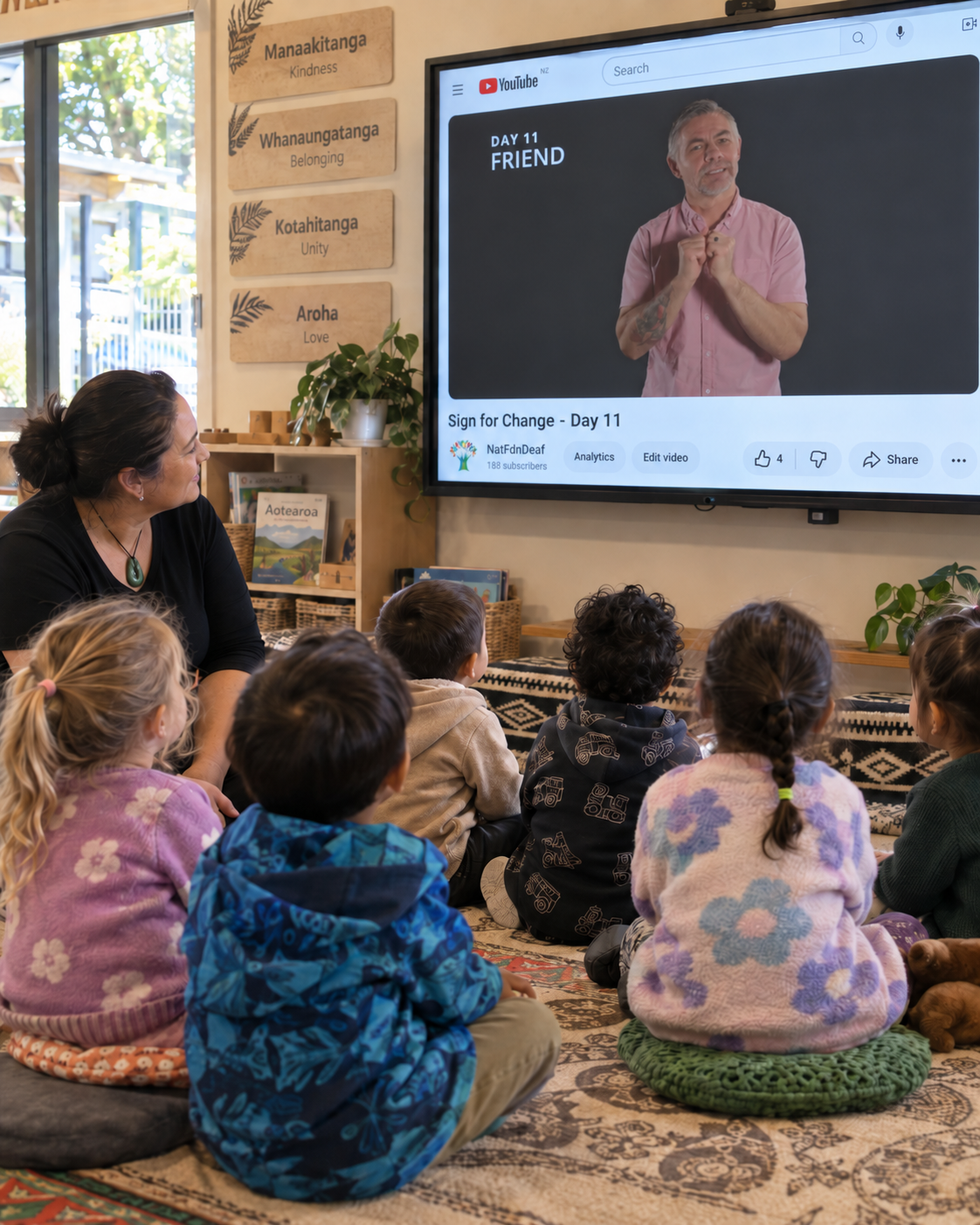 At The Y Birkdale ECE, tamariki began incorporating NZSL into their morning hui, including signing “good morning” alongside their Ata Mārie waiata. Kaiako saw children using the sign with friends as they arrived, while one child even took her learning home and taught signs to her older sisters.
For the centre, which had recently welcomed a Deaf two-year-old, the learning became part
of a wider commitment to inclusive communication.
“This experience has opened a whole new world of communication for our deaf child, his hearing sibling, and
their friends.”
Susan, The Birkdale ECE
Similar stories emerged from schools.
At Wellesley College, students practised NZSL together, incorporated signs into songs and classroom learning, and eventually taught their parents some of the signs they had learned. Teachers beyond the participating classes also became interested, and after the learning finished, some students were already asking what they could learn next.
Elsewhere, a teacher described signs such as “thank you”, “please”, “help me” and “understand” becoming part of everyday classroom communication, with teacher aides learning alongside students too.
A first step can spark something bigger
Sign for Change was never intended to make someone fluent in NZSL in 30 days.
Instead, its purpose was to offer a practical first step, making it easier for people to begin engaging with NZSL and thinking about different ways we communicate.
That distinction matters.
One participant described the challenge as giving their class a reason not only to practise NZSL, but to talk about why they were learning it. Signs began appearing in morning mat time and wider school activities.
Others simply wanted to keep going.
“More sentences! I want to learn more!!”
Angela London, participant
Those responses remind us that impact does not always begin with a dramatic change. Sometimes it starts with curiosity, a new conversation, a sign used at the right moment, or the confidence to continue learning.
The challenge has finished. The reason for learning hasn't
The stories shared with us do not suggest that 30 days alone can create an inclusive society or remove the communication barriers Deaf people experience.
They do, however, show what can happen when people are given an accessible opportunity to start.
A sign can move from a video into a classroom. From a classroom into a family. From learning something new into thinking more deeply about how we communicate with one another.
For many participants, Sign for Change was a beginning.
And that may be where some of its most important impact lies.
The Sign for Change videos and learning resources remain available, so you can continue learning NZSL and take your next step towards more inclusive communication.


No Comments
Comment below
Related Posts
William's story: When hearing loss goes unnoticed
Kiara's story: Hearing loss, stigma and confidence
Growing up with hearing aids: Gryffen's story