NZSL belongs everywhere: how technology and everyday action can help close the access gap
New Zealand Sign Language is one of Aotearoa New Zealand’s official languages. For many Deaf people, it is also the language of identity, culture, connection, and everyday communication. NZSL is not an alternative format, it is their first or preferred language.
But recognition and real access are not the same thing.
Across Aotearoa, NZSL has become more visible in recent years through NZSL Week, public briefings, media coverage, and awareness campaigns. These moments matter. They help more New Zealanders recognise NZSL as a real and valued language.
Yet visibility is not the same as everyday access.
Research into the current state of NZSL in New Zealand shows that “NZSL in Aotearoa has gained visibility faster than it has gained everyday infrastructure.” [1]
That gap affects whether Deaf people can access public information, understand services, participate in education, navigate workplaces, and feel included in the communities around them.
Sign for Change aims to support that shift by encouraging everyday learning, community action, Deaf community feedback, and tools that can help make NZSL more visible and accessible.
Recognition is not the same as access
There are encouraging signs. The 2023 Census showed that about 24,678 people used NZSL, an increase of 1,692 people since 2018.
But the wider picture is more complex. The refreshed NZSL Strategy 2026–2036 still describes NZSL as “at risk”, notes that NZSL users make up only about 0.5% of the population, and says NZSL is not well incorporated into many government work areas.
For Deaf people who use NZSL, access can still depend on whether a Deaf translator or expert has been booked, whether information has been translated, or whether an organisation has considered Deaf access from the start.
That is why New Zealand does not only have an NZSL awareness challenge. It has an NZSL access and infrastructure challenge.
When information is not accessible, independence is affected
Many hearing people receive information instantly through spoken updates, phone calls, videos, meetings, and everyday conversations. For Deaf people, that same information is not always equally available in NZSL.
When information is not accessible, it can mean missing an update, waiting longer for information, or having to ask someone else to explain something that should have been available directly.
This matters in everyday situations: health information, public services, school updates, transport, employment, emergency information, community events, and customer support.
The research identifies public service and information access as one of the most dominant issues. It notes that services and information are still “not always accessible in NZSL” and that NZSL is “not well incorporated” into many government work areas.[2]
Access also needs to recognise different experiences within the Deaf community, including Turi Māori, who can face additional barriers where NZSL, te reo Māori, and te ao Māori access intersect.[2]
This is not about convenience. It is about independence, dignity, and equal participation.
Deaf translators and experts are essential, but not always available
Qualified NZSL Deaf translators and experts play a vital role. They support access, accuracy, cultural understanding, and meaningful communication. In many settings — especially live, personal, complex, or sensitive situations — Deaf translators remain essential.
But access is not always available at the moment it is needed.
In the 2022 NZSL community survey, only about one third of people who use Deaf translators were extremely or very satisfied that a qualified translator would be provided in government services.
The question is not whether technology can replace interpreters. It cannot, and it should not.
The better question is: how can we create more ways for Deaf people to access information in NZSL, especially when Deaf translators are not available?
Where NZSL avatar technology can help
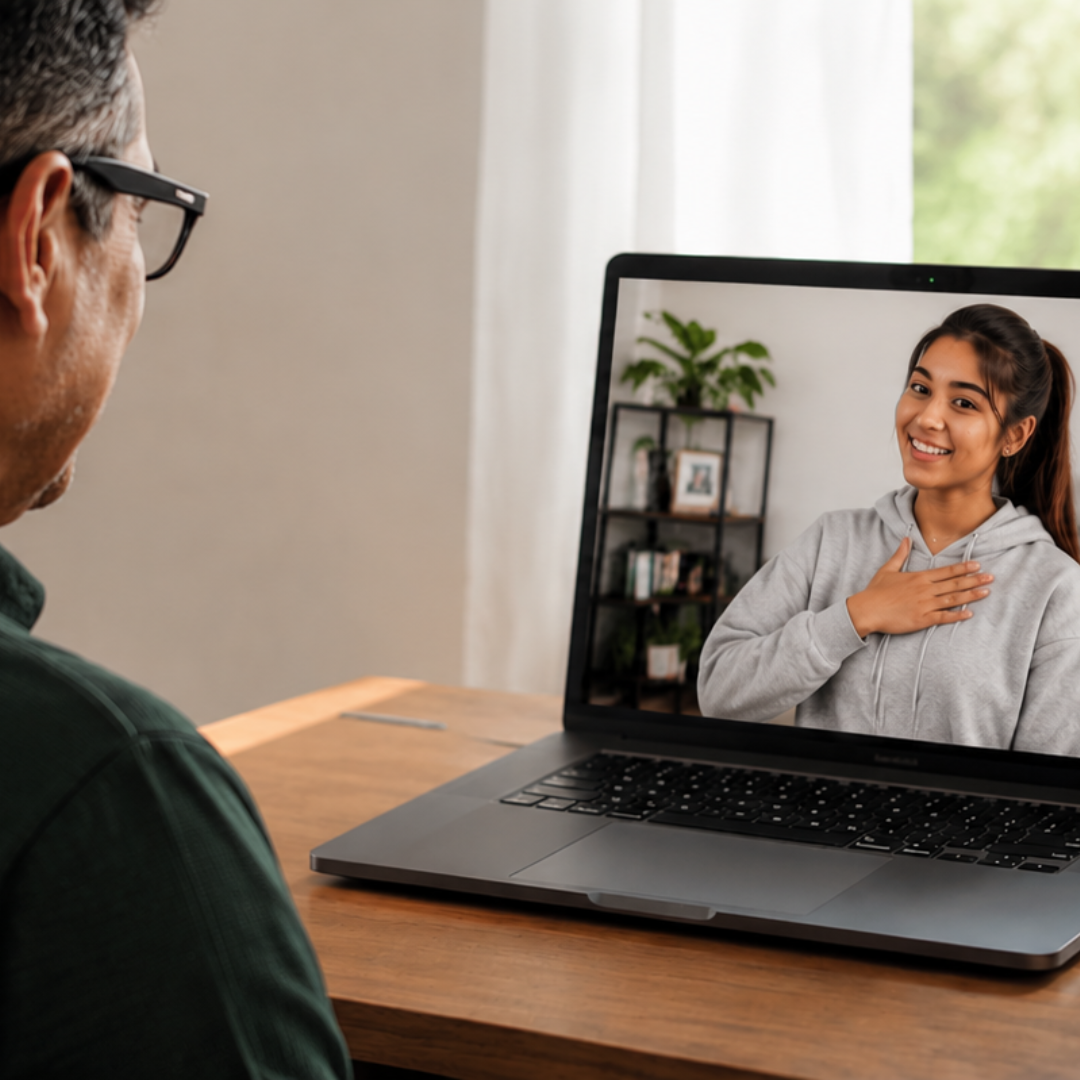 This is where new technology offers a hopeful opportunity.
Through the partnership between the Deaf and Hard of Hearing Foundation and Kara Technologies, NZSL avatar technology is being explored as one way to improve access to information for the Deaf community.
NZSL avatar technology uses a digital signing avatar to help translate information in New Zealand Sign Language. Its potential lies in supporting access to NZSL information in digital settings, particularly where information needs to be shared clearly, consistently, and repeatedly.
It is not a replacement for Deaf people, Deaf leadership, or qualified translators. It is one tool within a much wider accessibility toolkit.
Used carefully, and shaped with Deaf community input, NZSL avatar technology could help make more key information available in NZSL when a Deaf translator or expert is not available, supporting the access changes Deaf people have long been calling for. This may be especially useful for information organisations need to provide often, such as service explanations, public information, instructions, website content, or frequently used digital content.
The important word is support. Technology can support access. It can support organisations to think beyond written English. NZSL is not simply an accessibility feature; it is a language connected to culture, identity, and community. The technology must be developed and used in ways that respect NZSL as a full language, with its own grammar, expression, movement, facial expression, and cultural context.
Why small signs still matter
Deaf people and Deaf organisations have long advocated for stronger NZSL access; Sign for Change aims to support that call by helping more New Zealanders learn, notice, and act.
Learning basic signs is not the solution on its own, but it can be a respectful first step toward noticing NZSL, valuing it, and supporting wider access changes. It helps children, workplaces, and communities understand that people communicate in different ways.
From awareness to action
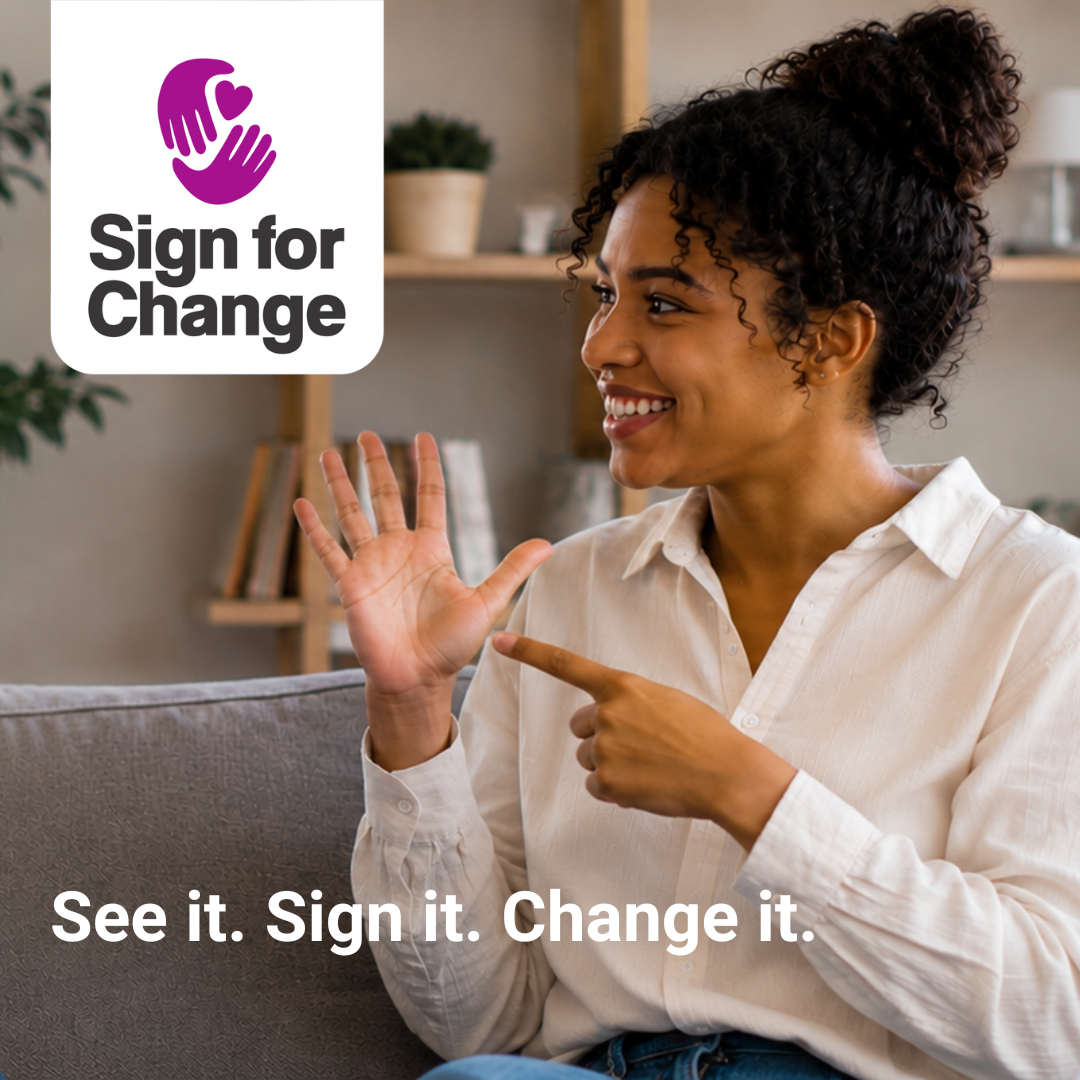 Sign for Change invites people to take part in practical ways.
That might mean learning one sign a day. It might mean introducing NZSL into a classroom or early learning centre. It might mean a workplace starting a conversation about accessible communication. It might mean donating to support greater access to NZSL technology and inclusion. It might mean sharing the campaign so more people understand why NZSL access matters. For Deaf NZSL users, Sign for Change is also an opportunity to share feedback and help shape how NZSL avatar technology develops in the future.
The action may be small, but the signal is powerful: NZSL belongs here. Learning and using NZSL is not a symbolic act, it is part of closing a real national access gap.
Take part in Sign for Change and help make NZSL more visible, valued, and accessible across Aotearoa.


No Comments
Comment below
Related Posts
From “You don’t listen” to living fully: Barry’s hearing health journey
How the Hearing Aid Fund helps find connection: Glenys's story