From frustration to funny: Jan's hearing loss story
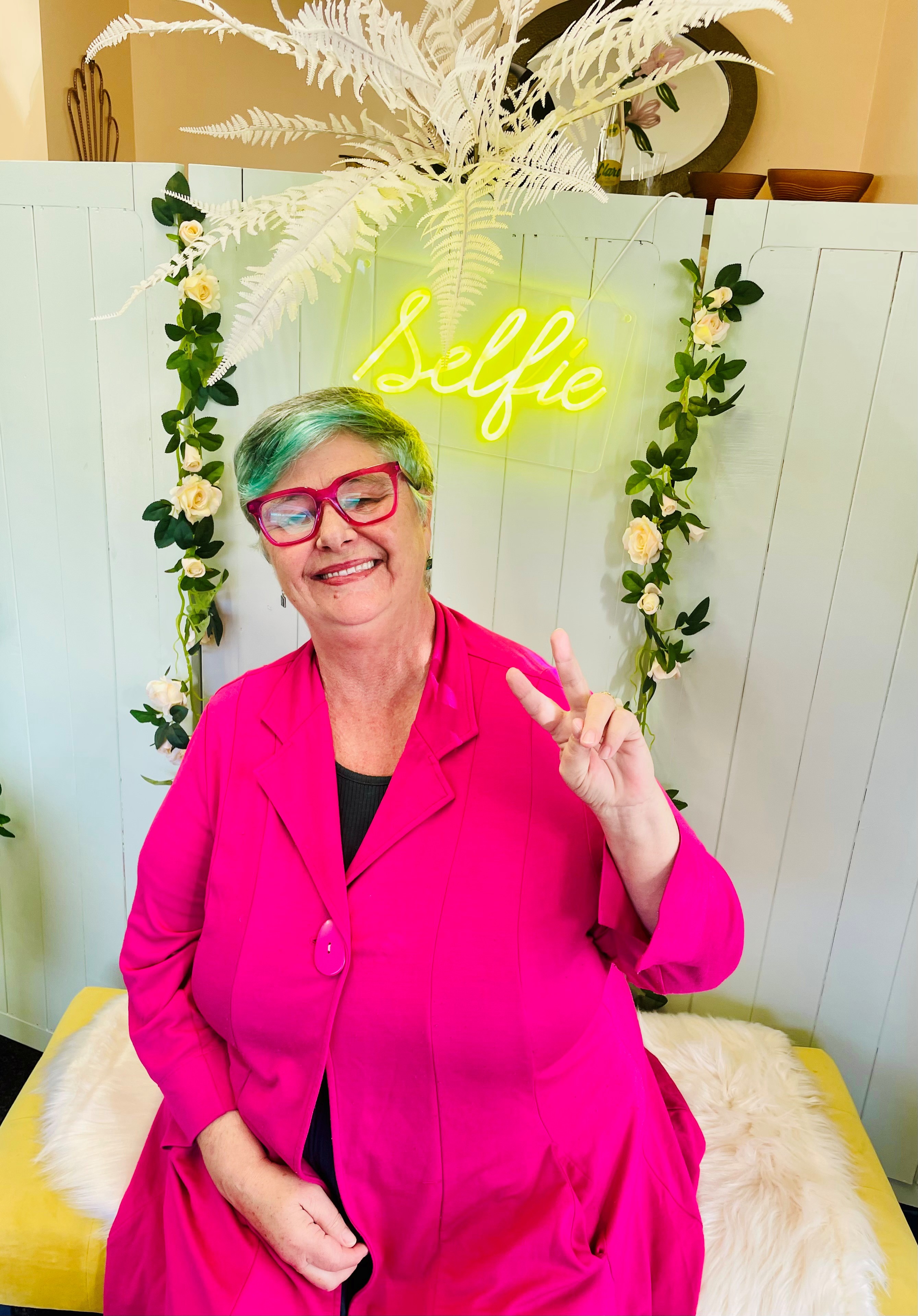 For Jan, the first real clue that something had changed came at work.
After years in customer service at Christchurch Casino, a move into cashiering made communication harder. People approached from a distance, often looking at their chips or money rather than at her. With background noise, other conversations and different accents around her, Jan found herself missing key words.
“All I heard was, ‘undy’,” she recalls.
She could not always tell whether someone was asking for a hundred dollars, saying something else entirely, or expecting her to fill in the gaps. It was enough to make her wonder: did she have hearing loss?
A hearing test confirmed that she did.
Hearing aids, then lockdown
Jan received her first hearing aids around the end of 2019. Not long after, New Zealand went into lockdown.
It was an unusual time to adjust to new hearing technology. With fewer conversations, fewer places to go and less everyday social contact, Jan was not wearing her hearing aids as consistently as she might have otherwise.
“I wasn’t wearing them,” she says. “You need to be wearing them all day, every day.”
When everyday life began opening up again, sound came back in layers. Birds, background noise, masks, glasses, screens and Bluetooth settings all brought their own small complications.
“I mean, yes, it’s lovely,” Jan says of hearing birds again, “but it’s also like, oh.”
It was not just about hearing more. It was about learning how to manage more sound.
Turning frustration into humour
Last year, after another period of frustration, Jan began writing her thoughts down.
She had been studying and found herself leaning across the room trying to catch quiet voices. She wanted to engage, but the effort was tiring. She was also becoming more aware of how often she had to explain her hearing loss to others.
At some point, she put those frustrations into ChatGPT and asked it to help make the words read better.
What came back surprised her.
Instead of a serious list of complaints, the words had taken on humour. The phrase “Bluetooth Babe” appeared — and something shifted.
“I was like, oh my God, that’s so funny,” Jan says. “That was what really switched it for me.”
The frustrations had not disappeared. But they had changed shape.
They became something Jan could laugh at, share and use to explain her experience to others. Later, she used ChatGPT again to turn those reflections into illustrated posters: bright, witty and honest snapshots of life with hearing aids.
The posters capture the small moments many people with hearing loss will recognise immediately: checking whether hearing aids are connected to Bluetooth, missing the middle of a sentence, asking people not to shout, needing someone to face you, and trying to keep a sense of humour when communication goes sideways.
They are funny, but they are not just jokes. They make invisible effort visible.
"Wear them and keep going back"
When asked what advice she would give someone newly diagnosed with hearing loss, Jan’s answer is immediate: “Wear them.”
Then she adds another important piece: keep going back. Small adjustments, questions and follow-up appointments can make a big difference.
“You get there,” she says.
Communication has always been messy
Jan’s story is not about hearing aids solving everything overnight. It is about learning, adjusting, asking for what you need — and finding a way to laugh when communication gets messy.
Hearing loss may add extra plot twists, but Jan’s posters remind us that patience, honesty and humour can help keep the conversation going.
View Jan's posters
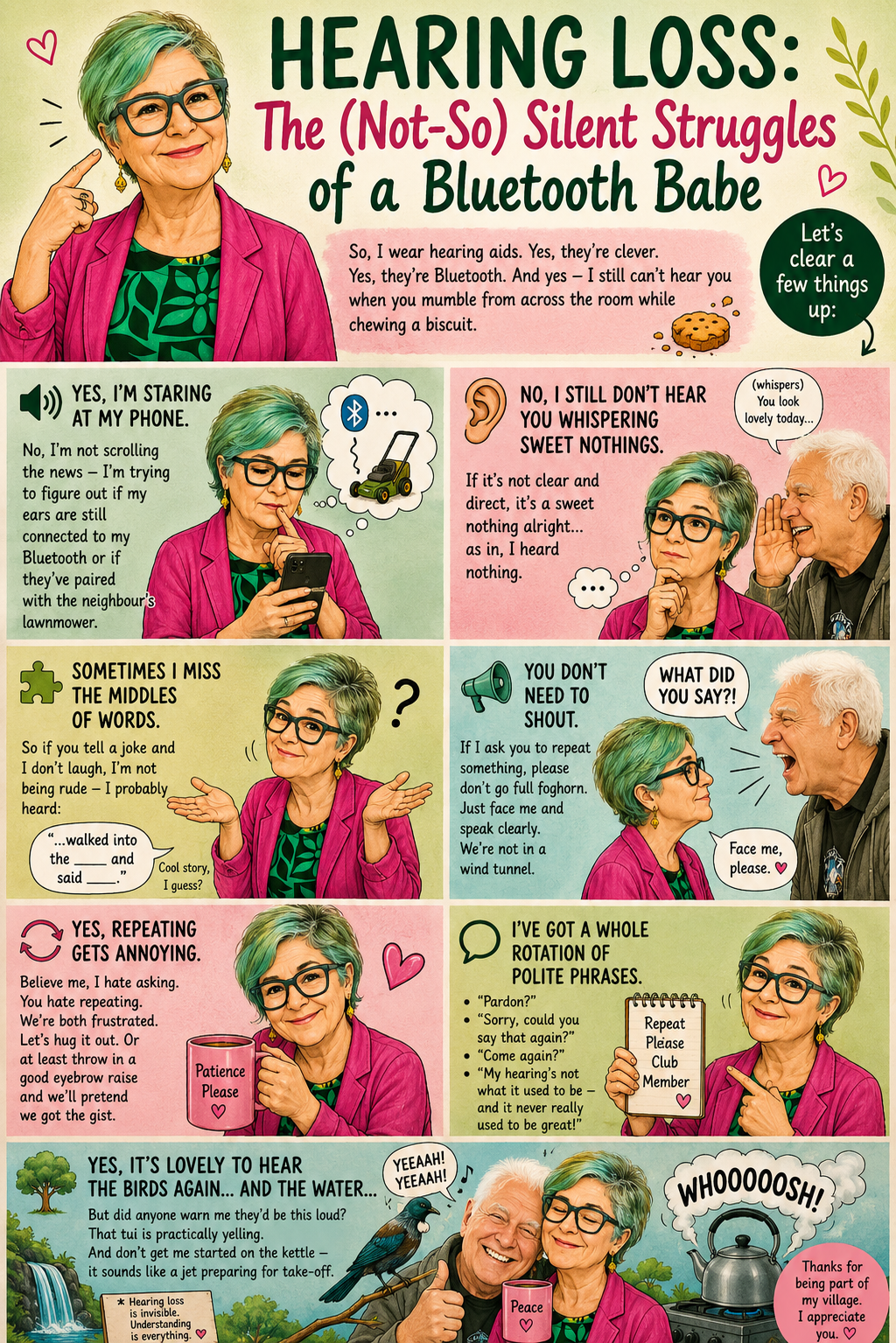 Jan's poster: The (Not-so) Silent Struggle of a Bluetooth Babe
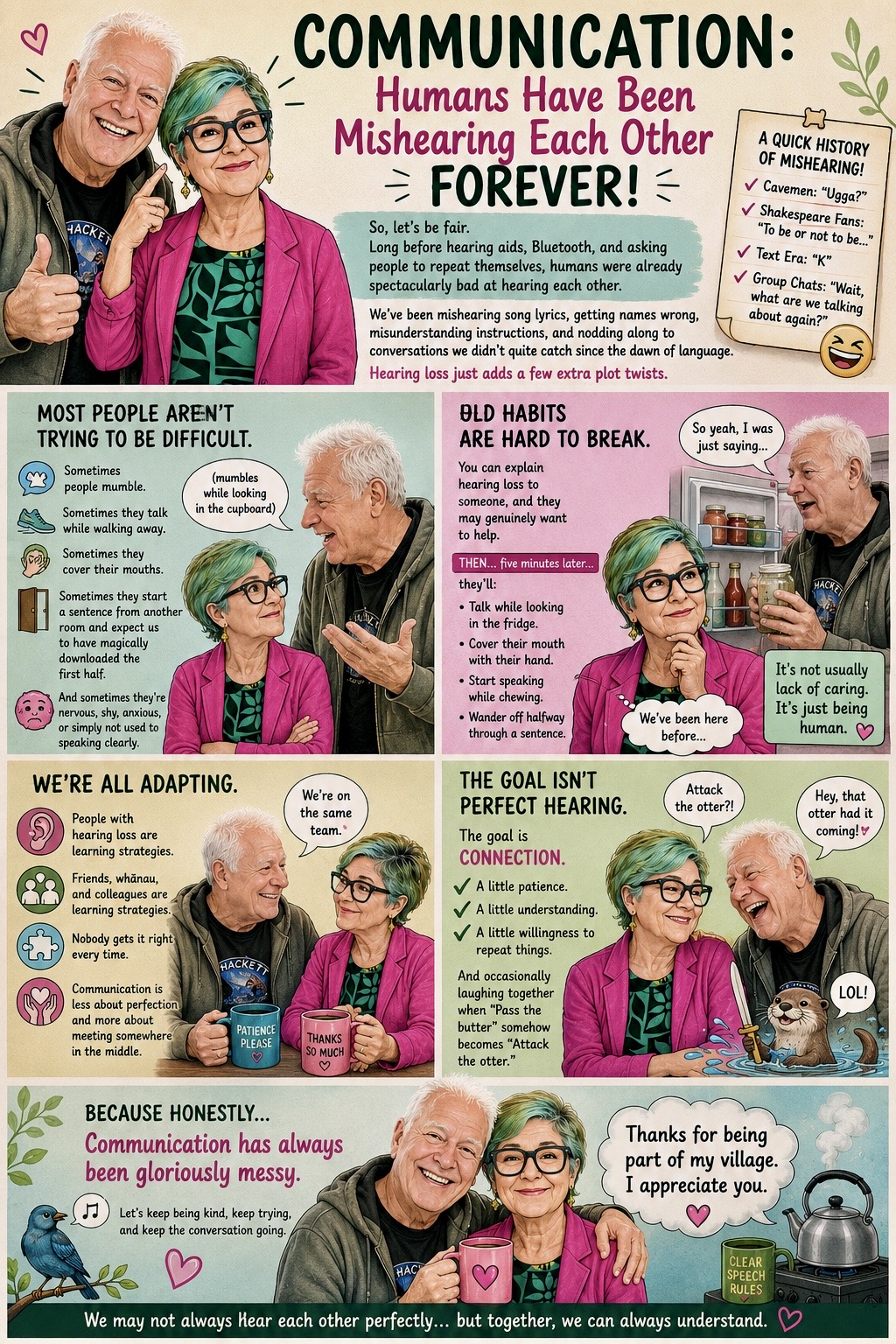 Jan's poster: Humans Have Been Mishearing Each Other Forever



No Comments
Comment below
Related Posts
Catherine’s story: hearing loss, work and finding her voice
From “You don’t listen” to living fully: Barry’s hearing health journey